The Container After the Container
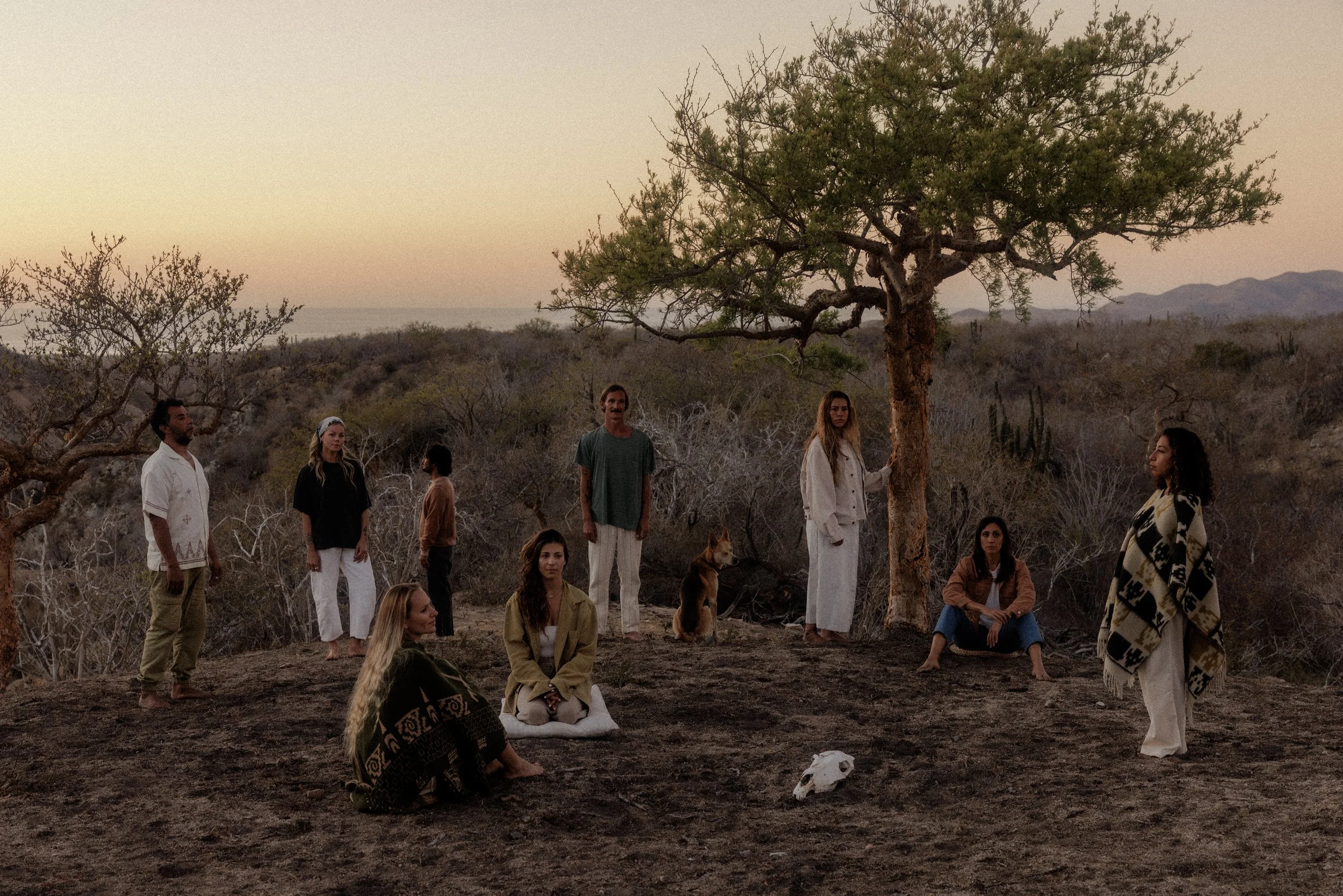
In the wake of a multi-layered psychedelic revolution, the obvious formula has been set. Preparation for the experience, the altered state of consciousness itself, and a strong, albeit somewhat vague, emphasis on integration.
But how exactly do we prepare a fragmented, colonized mind for powerful journeys rooted in ancestral traditions? How do we integrate a peak experience when much of the modern world is living in isolation, where empathy is an afterthought and individualism prevails? How do we support people in building a life they actually want to return to, particularly when systemic, collective issues are preventing even the smallest opening for ease, relief and connectedness?
A Western mind, a Western body, a Western experience—disconnected from each other, from the earth.
My Irish Catholic grandmother gave birth to six children, yet my aunts and uncles felt like strangers, distant relatives—too polite and tucked away to feel whole, to feel like a piece of the puzzle, a thread of our greater fabric. My grandfather taught me to love the rivers and the trees, creeks and boulders, though I did not know him. We did not sit by the fire.
My mother raised me by the beach, waves crashing in the sun and all those late night bonfires, our church. As a child my parents split in half, and back and forth I went. Some days I felt like a stranger, on most days I could feel my mother’s loneliness. I accepted this reality as a true expression of family, of understanding, of belonging, without realizing how much I was actually missing.
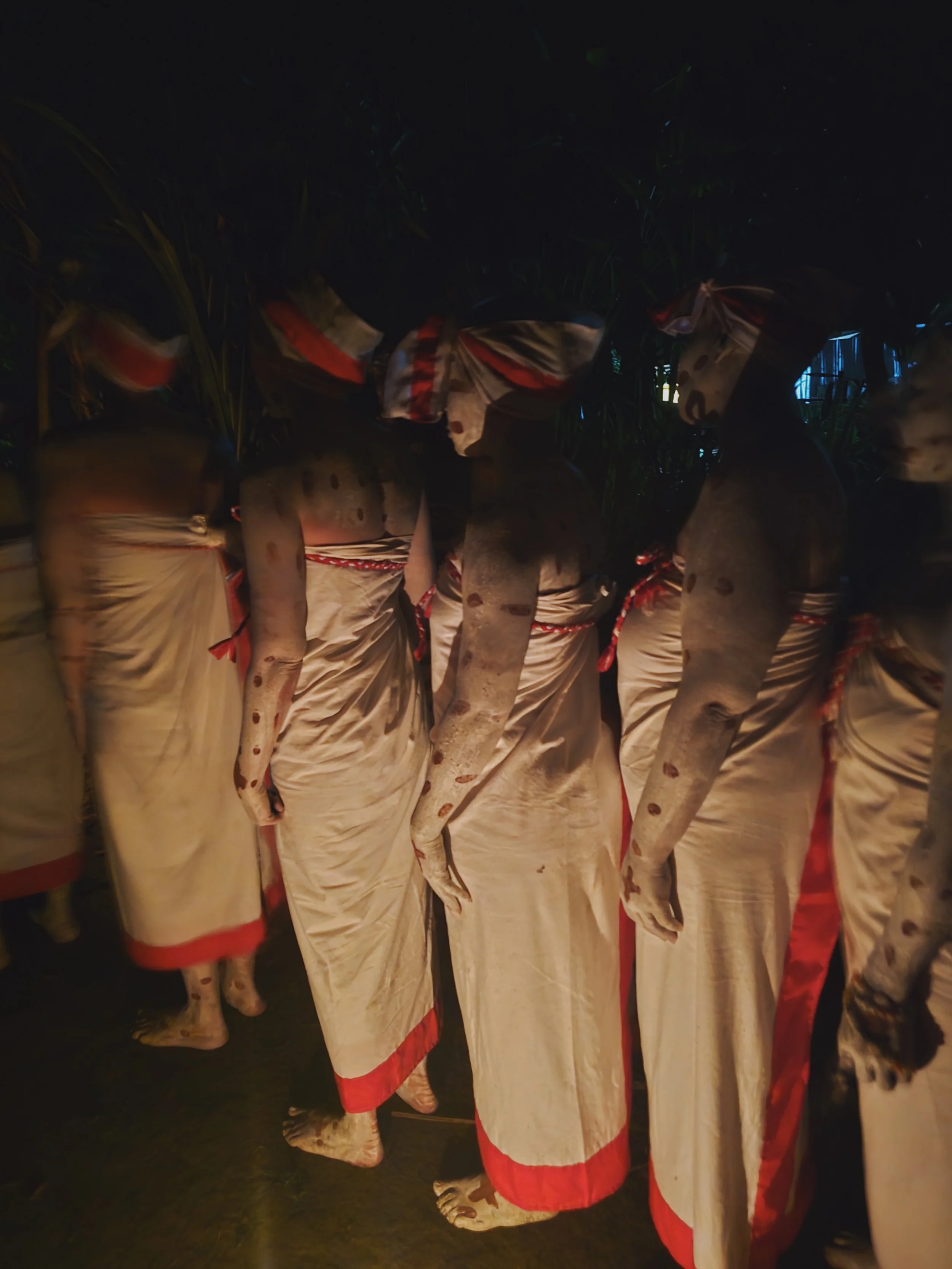
In my travels to Gabon to study the Bwiti tradition as a Western iboga provider I witnessed babies passed through many pairs of hands, old and young. Never a second thought, never a moment of resentment, never a burnt out mother holding her entire family alone, dull in her exhaustion. It takes a village, is not a distant memory but a truth that is lived.
I sought initiation expecting to learn about various branches of the Bwiti tradition, to deepen my relationship with a master plant—what I left with was a deeper understanding of community culture. Initiation is a powerful doorway where we learn about ourselves, what we are made of and tend to our inner flame. In the West we perceive this is a deeply personal process, but a meaningful piece of initiation is the celebration of crossing the threshold of a symbolic rebirth, and that homecoming cannot exist without a community of elders and youths bearing witness to it.
There, community is not a performance but just as essential and implicit as the forest that surrounds the village, as the sun and the moon and the stars above us. Witnessing a culture where communal care is woven into daily life made me realize how much of the modern healing model assumes the individual must carry transformation alone.
The psychedelic industry is becoming very skilled at the intervention itself—better protocols, tighter medical screening, a strong foundation of physical safety. We are learning. But what about the container after the container? This is not about more integration, but the kinds of ecosystems we’re integrating into.
Myself, my husband and our two children have had the privilege of immigrating to a small desert town on the Baja Peninsula of Mexico. Our desire to build a center for healing, and live a slower life with our children was the driving decision, but what we did not realize we had been missing in the United States was the community we were met with. Local folks in town met our fresh faces exclaiming, Welcome to your new beautiful life! No narrowing eyes, questioning our arrival—only warmth and a genuine embrace.
Now, after five years of rooting down in this beautiful country, we have realized the truest gift of this land has been the culture of family, of support, of relationship. When living in suburban America, I hardly knew my neighbors. I did not have anyone to call if I needed a school pick up in a pinch. Now I can think of at least half a dozen friends and community members that would race over to my child’s school without a second thought. The people in our world see us, and we see them. My teenager walks to bonfires on the beach with friends, and my daughter races over to the neighbors house to play without a plan. We know the farmers and the wood workers and the surfers and the yoga instructors, the horse whisperers and the clerks and the artists and the meditators and more.
The old way has become so very present in our lives that those who come into our world receive healing in the very witnessing of this connectedness. Seeing our sense of comfort with one another, allowing our true essences to shine through without judgment, the way we support each other, respect each other's gifts, and live in true intimacy together can be radical to those who have never lived this way with others.
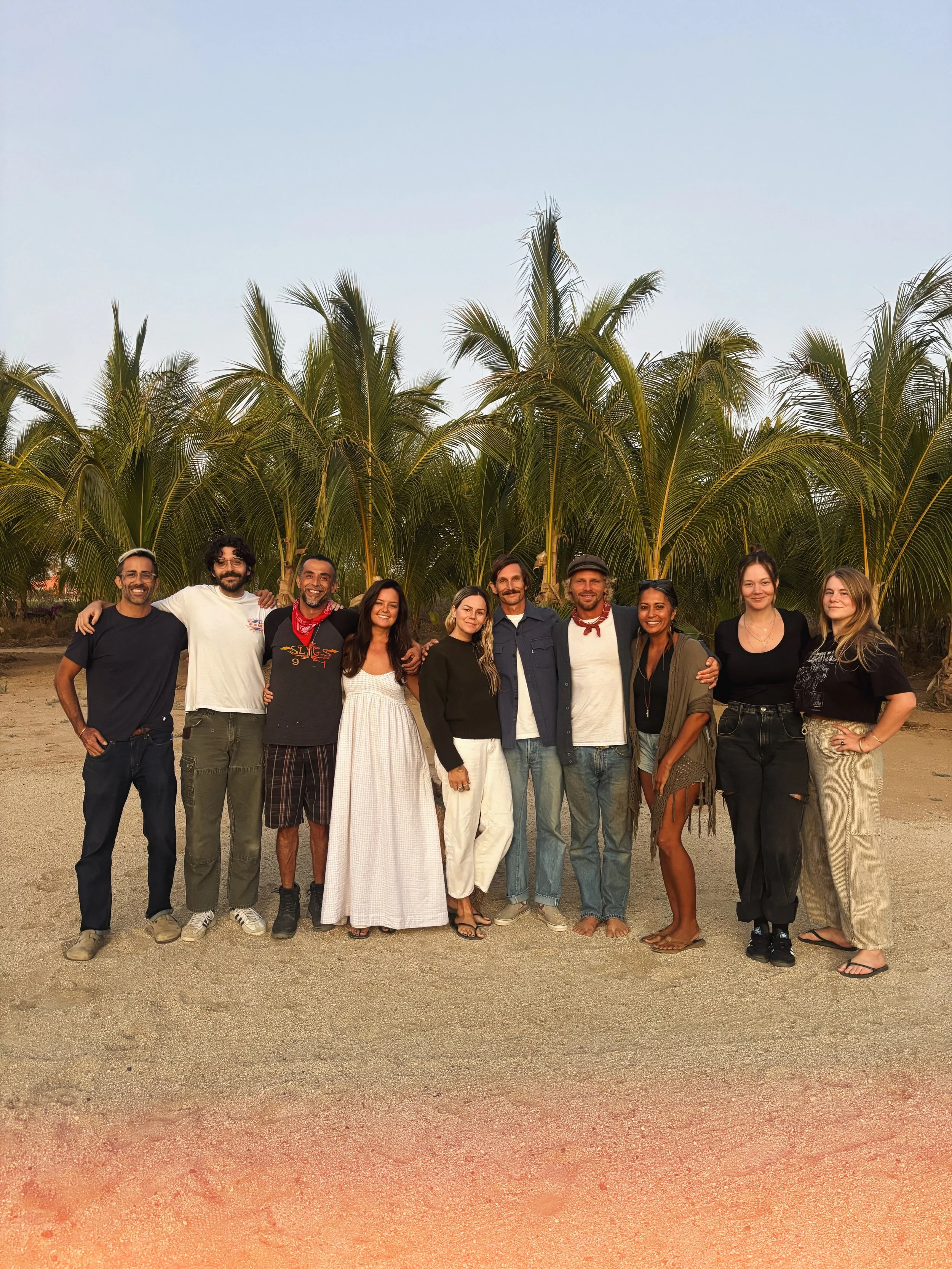
Our retreat team is its own micro community that feels like family. The chef drops off our son at school on his way into work when we have been awake all night in the temple, ready to make bone broth for the guests, and staff omelettes for us. We borrow cars, we pick up each other's packages, we drop soup when someone is sick. Our laughter and our joy in the work is of equal measure to how serious we take it, the friendship and community and shared experience of being of service is the river that runs through us all.
People who come to us are not simply healing from iboga. They are healing at the communal breakfast table, allowing each other to be seen in their vulnerability. I have heard countless guests say that hearing the team laughing together in the distance was one of their most comforting and meaningful moments. Perhaps this shouldn’t surprise us. Iboga has never been merely a pharmacological intervention. In the traditions from which it comes, healing unfolds within relationship, ritual, dance, family, and collective responsibility.
We keep asking individuals to solve problems that are fundamentally relational. Someone can dissect and understand every corner of their trauma, but still not have someone to share a meal with.
We can tell you exactly how to prepare your body, mind and spirit for iboga. We can review your EKG, your bloodwork, have all of the dosing protocols and an understanding of the neurological effects of the medicine, but who is asking whether there’s someone waiting for you when you get home?
Perhaps the next frontier isn’t the medicine itself, but the cultures capable of holding what the medicine reveals. The most valuable experiences will be time spent with others around the fire, on some special piece of land, telling stories and seeing a mirror in the person sitting across from you.
People long for the benefits of a village, but few of us have been taught how to be villagers. Community is not measured by the size of our social circle, and it is not necessarily friendship, but by the quiet reliability of the people woven into our lives. It means knowing someone will answer the phone, show up when it’s inconvenient, and trusting they know you would do the same.
Maybe integration isn’t falling short because we haven’t developed enough practices. Maybe its failing because we’re asking people to return to lives defined by isolation. We cannot prescribe community, and retreat guests cannot take our team home with them. But we can demonstrate it authentically, and we can remind people what it feels like.
If the next decade of psychedelic medicine is spent perfecting the journey while ignoring the cultures people return to, we’ll continue producing beautiful experiences that struggle to become beautiful lives. Healing from our traumas, our addictions, our grief and our self doubt cannot be done in isolation.